Saturday, August 3, 2013

butterfly species


Silver-spotted Skipper (Hesperia comma)

… is a butterfly of the ‘skipper’ family  Hesperiidae, found through out northern North America and Eurasia. It is known as the Common Branded Skipper in North America, where the butterfly Epargyreus clarus, a spread-winged skipper, also has the common name of “Silver-spotted Skipper".
Females lay single eggs during August and September on the leaf blades ofSheep’s Fescue, Festuca ovina, the only foodplant, and occasionally on nearby plants. Like other skippers the larvae construct small tent-like structures from leaf blades and silk from which to feed. They enter the pupal stage after 14 to 15 weeks at the base of the foodplant. Pupation takes 10 to 14 days, and as with most butterflies the males emerge first…

Silver-spotted Skippers (Hesperia comma) on thistle with diurnal burnett moth, Val d’Aosta, Italy
Florida declares two butterfly species extinct as pollinator crisis worsens
by Alexander Holmgren
Conservationist’s faced a crushing blow last month as two butterfly species native to Florida were declared extinct. 

“Occasionally, these types of butterflies disappear for long periods of time but are rediscovered in another location," said Larry Williams, U.S. Fish and Wildlife state supervisor for ecological services. We think it’s apparent now these two species are extinct." 

Neither species has been seen in any environment for at least nine years, the latter of the two not being seen since 2000. This calamity is only made worse by the fact that so much could have been done in order to save these creatures. The first species, the Zestos skipper butterfly (Epargyreus zestos oberon), had strong bodies with large black eyes and large wings that were adorned with spots that looked like eyes. While the Zestos skipper was visibly declining in its environment, the subspecies was denied access to the U.S.’s Endangered Species Act (ESA) because of the confusion between it and other skipper species in the Bahamas. In the end, what was thought to be a bountiful reserve in the Bahamas proved to be a completely different species. By the time the mistake was realized it proved too late. 

The Rockland grass skipper butterfly (Hesperia meskei pinocayo), an amber golden insect with club like antenna and black eyes, was similarly thought to be making a comeback as the species that had not been seen since the 80’s was spotted back in 2000. But is now believed extinct…


Tuesday, July 30, 2013

Scientists reveal secret of how 'monkey fish' were made


ca. 1860, [carte de visite portrait of a “Monkey Fish of Japan", one of many of such specimens created during the 18th and 19th centuries. This particular “merman" was later purchased by P.T. Barnum and shown at the Chinese and Japanese Warehouse on Regent Street in London], Gush and Fergusson

An investigation by St George's University and Horniman Museum in London has finally revealed how mermen and mermaid relics (sometimes referred to as monkey fish) may have been made.
They are thought to have been made by fishermen in Japan and East Asia and were bought by sailors as good luck charms or by circus entertainers to display as curiosities.
Early 20th Century scientists were baffled by the specimens, with some claiming them to be mummified mermaids.
They were later believed to be made from the head and body of a monkey sewn on to the tail of a fish, giving rise to the term "monkey fish".
It was not until March 2011 that an X-ray of the Horniman merman (affectionately known as Herman), revealed that the monkey half was in fact made from papier mache.
Using a combination of CT scans, microscopy, X-radiography and 3D printing, the research team have finally managed to piece together exactly how Herman was made.
Dr James Moffatt, a physiology lecturer at St George's University in London, explains the process.

Why Not Hand Over a ‘Shelter’ to Hermit Crabs? (2010)


Why Not Hand Over a ‘Shelter’ to Hermit Crabs? (2010)
Artist’s statement: 
"In this piece I gave hermit crabs shelters that I had made for them, and if they liked my shelters, I got them to use them as their shell. I overheard that the land of the former French Embassy in Japan had been French until October 2009; that it was to become Japanese for the following fifty years, and then be returned to France. This concept made me think of hermit crabs, which change their shells.
The same piece of land is peacefully transferred from one country to the other. These kinds of things take place without our being aware of it. On the other hand, similar events are not unrelated to us as individuals. For example acquiring nationality, moving, and migration. The hermit crabs wearing the shelters I built for them, which imitate the architecture of various countries, appeared to be crossing various national borders. Though the body of the hermit crab is the same, according to the shell it is wearing, its appearance changes completely. It’s as if they were asking, ‘Who are you?’"


Monday, July 29, 2013

Word of the Day | verity


verity •\ˈver-ə-tē\• noun

1. conformity to reality or actuality
2. an enduring or necessary ethical or religious or aesthetic truth
The word verity has appeared in 12 New York Times articles in the past year, including on Aug. 19 in the book review “Here if You Need Me” by William Giraldi:
There are two species of novelist: one writes as if the world is a known locale that requires dutiful reporting, the other as if the world has yet to be made. The former enjoys the complacency of the au courant and the lassitude of at-hand language, while the latter believes with Thoreau that ”this world is but canvas to our imaginations,” that the only worthy assertion of imagination occurs by way of linguistic originality wed to intellect and emotional verity. You close ”Don Quixote” and ”Tristram Shandy,” ”Middlemarch” and ”Augie March,” and the cosmos takes on a coruscated import it rather lacked before, an ”eternal and irrepressible freshness,” in Pound’s apt phrase. His definition of literature is among the best we have: ”Language charged with meaning.” How charged was the last novel you read?

The Word of the Day and its definitions have been provided byVocabulary.com and the Visual Thesaurus.
Learn more about the word “verity” and see usage examples across a range of subjects on the Vocabulary dictionary.
Click on the word below to map it and hear it pronounced:

6 Q’s About the News | On the Cover of Rolling Stone


6 Q’s About the News | On the Cover of Rolling Stone

In “CVS and Walgreens Ban an Issue of Rolling Stone,” Noam Cohen writes about criticism that the latest cover of the magazine glamorizes the surviving suspect in the Boston Marathon bombings.
WHO is on the latest cover of Rolling Stone magazine?
WHY did the chain stores CVS and Walgreens say this week that they would not sell it?
WHAT has being on the cover of Rolling Stone long been a sign of?
WHEN did the Boston bombings occur?
WHERE did Boston Mayor Thomas M. Menino send a letter to object to the cover?
WHAT is the Rolling Stone article about?
HOW did the magazine defend its cover?

For Higher-Order Thinking:
HOW do you feel about this cover? Do you agree with Rolling Stone that it helps young people understand some of the “complexities” of who this young man is, or do you agree with those who say it “glorifies” him? WHAT do you think Rolling Stone could have put on its cover instead? WHAT do you think about what this Massachusetts State Police sergeant did in response?

Sunday, July 28, 2013

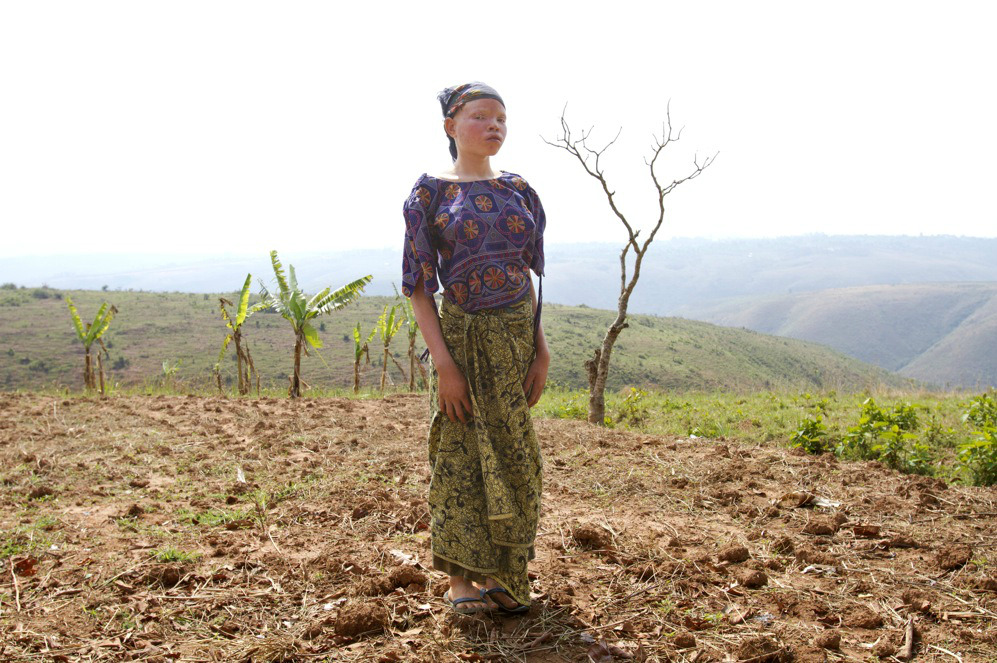
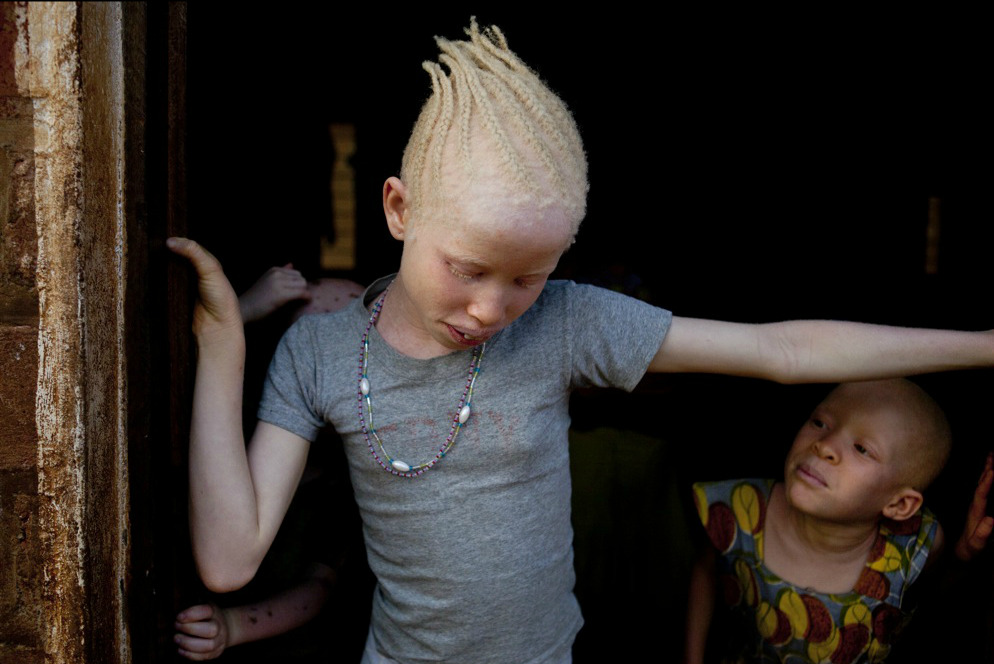
Jacquelyn Martin - Tribe of Ghosts (2012)


Jacquelyn Martin - Tribe of Ghosts (2012)
About Martin’s series:
"Photographers look for beauty in unexpected places. And in parts of Tanzania — a society that gravely mistreats albinos — photojournalist Jacquelyn Martin set out to show how beautiful she thinks they are.
Tanzanians with albinism endure a particularly cruel fate. Not only do they suffer from sun sensitivity and vision problems, but they are also hunted by witch doctors who believe their body parts can be used for magic.
Since 2006, more than 71 albinos have been killed in Tanzania so their bodies could be made into potions."They go through daily prejudice and hardship," Martin says on the phone. “People around them don’t think of them as humans."
Tanzania — which is thought to be the birthplace of the genetic mutation — has one of the highest rates of albinism in the world. Albinos account for nearly 1 in every 1,400 people, compared to about 1 in 20,000 worldwide. And because of social discrimination, albinos tend to marry each other, thereby passing their genes to their children.
Martin worked with a translator to interview her subjects and take their portraits. In some cases, it was the first time they had ever had their photo taken.
"In society, they are reviled, so they really responded to being treated with dignity and being photographed in a respectful, humanitarian manner," she says."I really think there is something special in this collection of portraits where their inner beauty shines through," she adds. “We would talk about their experiences … and they would laugh and love that they were in the pictures."The Kabanga center and others like it protect people with albinism but also isolate them. Martin plans to give prints to every person she photographed."Because they are not treated like humans, because they are not treated with respect, I hope they have a little something that helps them reflect on the beauty in themselves — to help them going forward."

Friday, July 26, 2013

The big bang theory science jocks

there is a farmer and he has chickens but they don't lay any eggs so he called a physicist to help , the physicist then does some calculations and he said i have a solution but it only works with spherical chickens in a vacuum  

The big bang theory science jocks